Built and run by operational firefighters.

Modern commercial building facade
Expert Fire Safety Guidance

Industrial Facilities Guidance

Comprehensive fire safety resources and statutory guidance for businesses, property owners, and responsible persons in the industrial sector.

Industrial Facilities Guidance

Comprehensive insights into the requirements and available guidance for fire safety in industrial facilties.

Manufacturing Facilities

Fire Safety in Manufacturing & Industrial Facilities
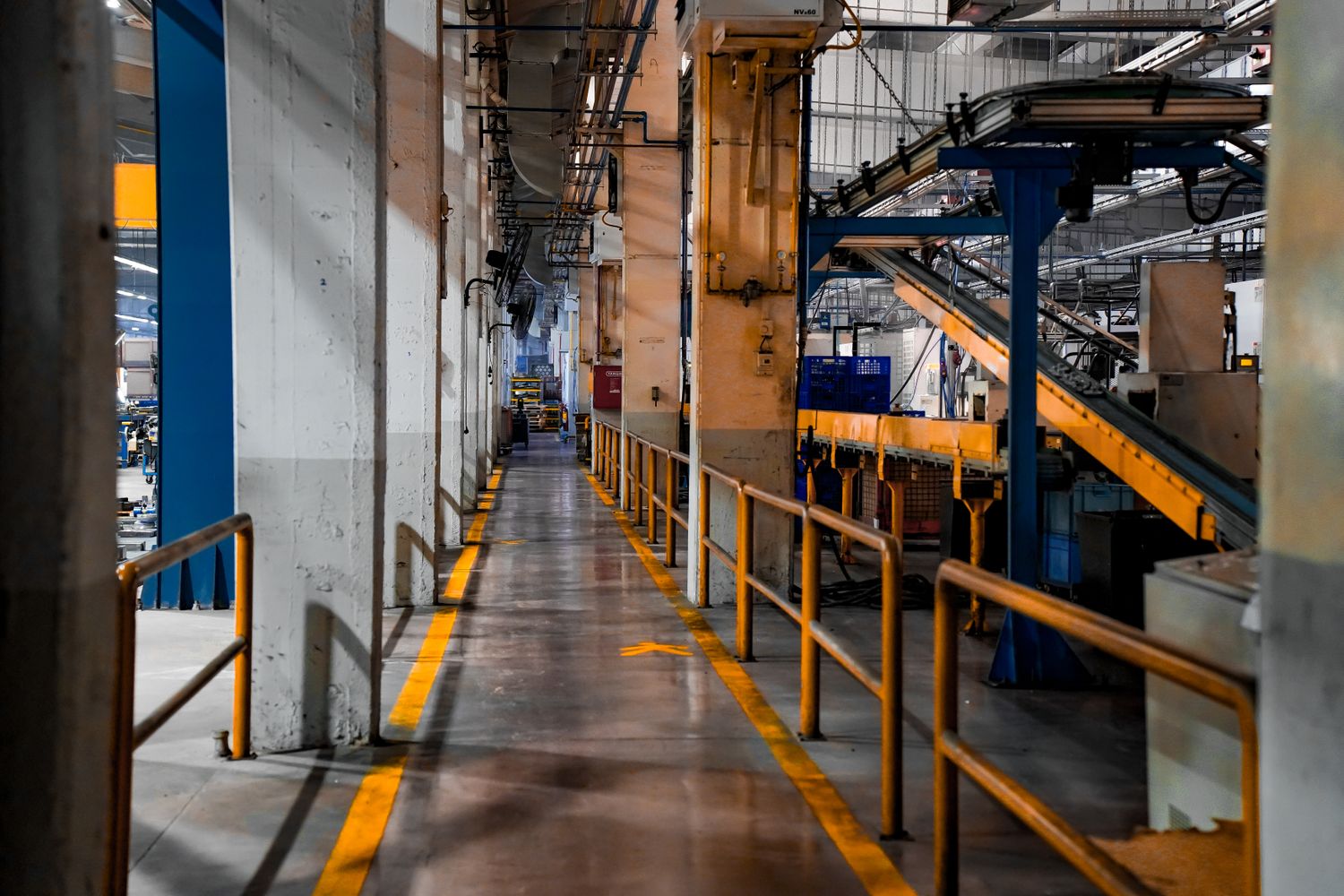
Manufacturing plants and factories are high-stakes environments. You aren't just managing people; you are managing heavy machinery, heat-generating processes, combustible dust, and often large quantities of raw materials. In these buildings, fire spreads differently. Vast, open-plan floors allow smoke to travel fast, while high-racked storage can create "chimney effects" that pull flames upward in seconds. For a manufacturing business, a fire isn't just a safety risk, it’s a "business death sentence" that can destroy specialized equipment that takes months to replace.

Here is the practical breakdown of what factory owners and industrial managers need to have in place.


1. The Fire Risk Assessment: Beyond the Basics
In a factory, the Fire Risk Assessment (FRA) must be much more technical than in an office. It needs to look at "Process Risk."

Hot Work Management: If your facility involves welding, grinding, or any flame-cutting, you must have a formal "Hot Work Permit" system. This ensures that any work involving heat is monitored and that the area is checked for "smouldering" for at least an hour after the work ends.

Machinery Maintenance: Overheating bearings or electrical faults in heavy machinery are leading causes of industrial fires. Your FRA should be linked to your PAT testing and machinery service logs.

2. Specialized Detection: Hearing the Alarm
A standard alarm bell is useless if your staff are wearing ear protection or if the factory floor is thundering with machinery noise.

Visual and Audible Signals: You must use a combination of high-decibel sirens and visual flashing beacons. In a noisy environment, a worker might not hear the alarm, but they will see the pulsing red lights on the walls or ceiling.

Detection in High Ceilings: Standard smoke detectors are often ineffective in very high-bay warehouses or factories because the smoke cools and "stratifies" before it reaches the ceiling. In these cases, you often need Aspirating Smoke Detection (ASD), which uses pipes to actively suck air samples from the floor level up to a sensor.

3. Travel Distances and Escape Routes
Manufacturing sites are often massive. If a fire starts at one end of a 100-metre production line, your staff need to be able to get out before they are overcome by smoke.

The Travel Distance Rule: You must ensure that the distance a worker has to walk to reach a fire exit is within the legal limits (usually between 18m and 45m depending on the risk level and the number of exits available).

Clear Markings: In a large, busy plant, escape routes can easily get blocked by pallets or machinery. You should use floor markings (yellow/green "walking man" paths) to clearly define where the escape route is and ensure it is kept strictly clear at all times.

4. Hazardous Substances (DSEAR)
If your manufacturing process involves chemicals, gases, or even "dusty" materials like flour, wood dust, or fine metal powders, you have an explosion risk.

The DSEAR Assessment: Under the Dangerous Substances and Explosive Atmospheres Regulations, you must identify any area where an explosive atmosphere could form.

Storage: Flammable liquids (paints, thinners, fuels) must be stored in specialized, fire-rated "Flammable Cabinets" or external bunkers, never just left out on the factory floor.

5. Firefighting and Suppression
Because of the scale of industrial buildings, handheld extinguishers might not be enough to stop a fire from becoming a catastrophe.

Sprinklers and Wet Risers: Many industrial units require automated sprinkler systems. If your building is large, you may also need "Wet or Dry Risers", internal pipes that allow the fire brigade to pump water directly to the heart of the factory without dragging hundreds of metres of hose through the building.

Specialized Extinguishers: You need a mix of extinguishers tailored to your risks. For example, if you have large electrical switchrooms, you’ll need large-capacity CO2 extinguishers. If you deal with combustible metals (like magnesium or aluminium), you need specialized Class D powder extinguishers.


The Essential Rulebooks
If you manage a manufacturing or industrial site, your compliance is measured against the official government standard:

HM Government Fire Safety Risk Assessment: Factories and Warehouses:  This is the core guidance document. It provides the technical tables for travel distances, the rules for storing hazardous materials, and the requirements for emergency lighting in large-scale industrial spaces.

DSEAR (Dangerous Substances and Explosive Atmospheres Regulations 2002): Essential reading if your logistics operation involves storing any chemicals, fuels, or compressed gases.


Warehouses and Distribution Centres

Fire Safety in Warehouses and Distribution Centres
Warehouses and distribution centres are fundamentally different from standard factories. While a factory is focused on process and machinery, a warehouse is focused on density. The entire business model revolves around stacking as much combustible material (cardboard, wooden pallets, shrink-wrap) as high as physically possible into a single, massive open space. Because of this density, if a fire breaks out, it can grow to an unmanageable size in a matter of minutes. Modern logistics also introduce new hazards, such as massive banks of charging stations for electric forklifts or automated picking robots.

Here is the practical breakdown of what warehouse operators and logistics managers need to have in place.


1. High-Bay Racking and the "Chimney Effect"
The way you store your goods directly dictates how a fire will behave. High-bay racking creates vertical channels between the pallets.

The Chimney Effect: If a fire starts at the bottom of a rack, the flames and superheated gases rush straight up through these narrow gaps, pre-heating the goods above and causing the fire to spread vertically at terrifying speed.

In-Rack Sprinklers: For very high racking or densely packed distribution centres, standard roof-mounted sprinklers are often not enough because the water cannot penetrate down through the stacked pallets. You will often need an In-Rack Sprinkler System, which runs pipework directly through the racking structure to stop a fire at the exact tier it starts.

Mezzanine Floors: If you install a mezzanine floor to increase storage, it must be carefully assessed. Most simple storage mezzanines don't need heavy fire rating, but if staff work continuously on them (e.g., a packing station), the underside will usually require a 60-minute fire-rated ceiling, and the floor will need its own dedicated smoke detectors.

2. Travel Distances and Escape Routes
In a sprawling, 50,000+ square foot distribution centre, the distance to the nearest exit can quickly become a matter of life and death.

Maximum Travel Distances: Your Fire Risk Assessment must calculate exactly how far a worker has to walk to reach a fire exit. In a standard risk warehouse, the maximum travel distance is generally around 45 metres (if they can flee in more than one direction) or 25 metres (if there is only one way out).

Unobstructed Aisles: It is a constant battle in busy warehouses to stop staff from leaving overflow stock, empty pallets, or pump trucks in the aisles. Escape routes must be clearly marked (often painted walkways) and kept completely sterile.

3. Forklift Charging and DSEAR
Mechanical handling equipment is essential, but charging it introduces severe risks.

Battery Hazards: Whether you use traditional lead-acid batteries (which give off explosive hydrogen gas when charging) or modern lithium-ion batteries (which carry the risk of "thermal runaway" and explosive fires), your charging bays are the most dangerous part of your warehouse.

Separation: Charging stations must be strictly segregated from the main storage areas. They should ideally be backed against a fire-rated wall, kept at least 3 metres away from combustible stock, and have dedicated high-level ventilation to extract any explosive gases.

The DSEAR Assessment: If you store large quantities of aerosols, flammable liquids, or fuel, you must have a Dangerous Substances and Explosive Atmospheres Regulations (DSEAR) assessment alongside your standard FRA. This dictates how these items are caged and limits the quantities you can store.

4. Detection in Extreme Environments
Standard smoke detectors simply do not work in massive, high-ceilinged warehouses.

Aspirating Smoke Detection (ASD): In a high-bay warehouse, smoke from a small fire will cool down as it rises, forming a "cloud" halfway to the roof without ever triggering a ceiling detector. To counter this, warehouses use ASD systems. These are networks of pipes that constantly suck air samples from across the warehouse and pass them through a highly sensitive laser chamber to detect microscopic smoke particles long before a visible fire breaks out.

Overcoming the Noise: Warehouses are loud. Forklifts, reversing sirens, and conveyors will drown out a standard fire bell. You must install high-decibel sounders paired with visual flashing beacons (strobes) so that workers wearing ear protection or operating loud machinery can clearly see the alarm has been raised.

5. Waste Management and Housekeeping
Poor housekeeping is the leading cause of preventable warehouse fires.

Combustible Waste: Cardboard boxes, shrink-wrap, and broken wooden pallets have incredibly high calorific values, meaning they burn intensely hot and very fast. You must have a strict "clean as you go" policy.

External Bins: Skips and waste compactors must be positioned securely outside, at least 10 metres away from the building's exterior walls. Arson is a major threat to industrial units, and a fire started in a skip pushed up against a metal cladding wall will quickly spread to the inside of the warehouse.


The Essential Rulebooks
If you manage a warehouse or distribution hub, your compliance relies heavily on:

HM Government Fire Safety Risk Assessment Factories and Warehouses: This is the foundational guide for calculating escape routes, signage, and basic fire safety in industrial spaces.

DSEAR (Dangerous Substances and Explosive Atmospheres Regulations 2002): Essential reading if your logistics operation involves storing any chemicals, fuels, or compressed gases.


Laboratories 

Fire Safety in Laboratories
Laboratories aren't just offices with white coats. They combine high-value, sensitive electronic equipment with hazardous chemicals, highly flammable solvents, compressed gases, and sometimes combustible dusts. If a fire starts in a lab, it can escalate into a toxic or explosive event in a matter of seconds. Whether you manage a small university research room, a medical testing facility, or a large-scale commercial R&D site, the safety rules shift heavily toward chemical management and explosion prevention.

Here is the practical breakdown of what laboratory operators and facility managers need to have in place.


1. The Two Assessments: FRA and DSEAR
In a standard commercial building, you just need a Fire Risk Assessment (FRA). In a lab, that is only half the job.

The DSEAR Assessment: Because labs handle solvents, gases, or fine powders, you almost certainly need a Dangerous Substances and Explosive Atmospheres Regulations (DSEAR) assessment. This identifies exactly where an explosive atmosphere could form (e.g., vapour building up from an open beaker of solvent) and dictates the "zoning" to ensure no ignition sources are near that area.

The Golden Rule: The best fire safety strategy in a lab is elimination. If you can use a less flammable chemical to achieve the same result, you must do so.

2. Chemical Storage: Segregation is Key
How you store your chemicals directly dictates how a fire will behave. Throwing everything into one cupboard is a recipe for disaster.

Limit the Bench Quantities: You should only keep the absolute minimum amount of chemicals on the lab benches needed for that day's work. Industry guidance generally states there should be no more than 50 litres of highly flammable liquids in any one laboratory room.

Flammables Cabinets: Flammable solvents (like ethanol or hexane) must be locked in specialized, fire-resisting metal cabinets. These cabinets must have a "bund" (a deep metal spill tray at the bottom) capable of holding 110% of the volume of the largest container stored inside, so if a bottle smashes, the fuel doesn't leak across the floor.

Incompatible Substances: You must never store oxidizing agents (like hydrogen peroxide) with flammable liquids. Strong acids and alkalis must also be kept in completely separate, corrosion-resistant cabinets.

3. Fume Cupboards and Extraction
Fume cupboards are your primary defence against the build-up of explosive or toxic vapours, but they are frequently misused.

Not for Storage: A fume cupboard is a workstation, not a storage unit. If staff use them to permanently store dozens of bottles of chemicals, it disrupts the airflow. This means the extraction fan can't do its job, and dangerous vapours can leak out into the room.

Duct Maintenance: The ductwork sucking vapours out of the building can accumulate highly flammable chemical residues over time. The entire extraction system must be strictly maintained and regularly inspected.

4. Gas Cylinders and Piped Gases
Many labs rely heavily on compressed gases. In a fire, a heated gas cylinder becomes a massive bomb.

Outside is Best: Ideally, bulk gas cylinders (especially highly flammable ones like hydrogen, or oxidizers like pure oxygen) should be stored outside in a secure, well-ventilated cage, with the gas piped into the lab through industrial, welded pipework.

Inside Rules: If cylinders must be kept inside the lab, they must be securely chained upright to a solid wall or a heavy bench. They must never be left freestanding where they could be knocked over, snapping the valve.

Emergency Shut-Offs: There must be clearly marked emergency isolation valves for all piped gases positioned near the lab exits. If a fire breaks out, staff can hit the shut-off on their way out, cutting the fuel supply.

5. Evacuation and Access Control
Labs are often highly secure environments to protect expensive equipment or dangerous substances, which creates unique evacuation problems.

Fail-Safe Doors: Many labs use swipe-card or biometric locks on the doors. It is a strict legal requirement that these electronic locks are wired directly into the fire alarm system. The moment the alarm sounds, all doors must "fail-safe" (automatically unlock) so staff are never trapped inside.

Specialised Extinguishers: A standard water extinguisher is useless and potentially lethal in a chemical lab. You need a highly specific mix of extinguishers. For example, CO2 extinguishers are essential for electrical fires, while you may need specialized Class D powder extinguishers if you work with combustible metals like magnesium or aluminium.


The Essential Rulebooks
If you operate or manage a laboratory space, your safety and legal compliance are anchored by two core documents:

DSEAR (Dangerous Substances and Explosive Atmospheres Regulations 2002): This is the absolute bible for any workplace handling, storing, or processing flammable chemicals, solvents, or compressed gases.

HM Government Fire Safety Risk Assessment: Depending on your building type, you will use either the Factories and Warehouses guide or the Offices and Shops guide to cover the basic building requirements (like alarm spacing and travel distances).


Waste Management Facilities

Fire Safety in Waste Management Facilities
Waste management and recycling sites are some of the most challenging environments in the UK when it comes to fire safety. You are dealing with vast quantities of highly combustible materials (cardboard, plastics, wood, and Refuse Derived Fuel). In these facilities, fires don’t just happen because someone dropped a cigarette; they happen spontaneously due to self-heating deep inside waste piles, or from hidden lithium-ion batteries being crushed by machinery. Furthermore, a major fire at a waste site isn't just a safety issue, it is a massive environmental disaster due to toxic smoke plumes and contaminated water runoff.

Here is the practical breakdown of what waste site operators and facility managers need to have in place to keep their sites safe and legally compliant.


1. The Fire Prevention Plan (FPP): The Golden Ticket
In standard commercial buildings, you just need a Fire Risk Assessment. If you operate a waste site in England or Wales, you must also have a Fire Prevention Plan (FPP) approved by the Environment Agency (or Natural Resources Wales). Without an approved FPP, you cannot get or keep your Environmental Permit to operate.

The Three Goals: The EA dictates that your FPP must prove you can achieve three things: minimise the likelihood of a fire, aim to extinguish a fire within 4 hours, and prevent the fire from spreading to neighbouring businesses.

A "Live" Document: Your FPP must outline your exact site layout, where waste is stored, how much is stored, and your specific firefighting tactics. If you change your site layout or start accepting a different type of waste, the FPP must be formally updated.

2. Managing the Piles: Stack Sizes and SeparationWaste burns hot and fast. If all your waste is in one massive pile, the fire brigade cannot stop it. The core of your fire strategy is based on strict geometry.

Maximum Stack Sizes: The guidance strictly limits how high, wide, and long a pile of combustible waste can be depending on the material.

Separation Distances: You must implement a "fire break" between piles. The standard rule is a 6-metre clear gap between waste stacks. If you don't have the space for a 6-metre gap, you must build heavy-duty, fire-resistant push walls or concrete bunker bays to separate the waste streams.

Stock Rotation (First In, First Out): Piles of wood, green waste, and general refuse act like giant compost heaps; they generate their own heat. If left too long, they will spontaneously combust. You must prove you operate a strict rotation policy so the oldest waste is always processed first.

3. The Hidden Threats: Batteries and Thermal Runaway
The biggest cause of waste fires today is the "zombie battery."

Lithium-Ion Batteries: People throw vapes, phones, and power tools into general recycling. When these hit a shredder or baler, they are crushed. The battery goes into "thermal runaway," exploding and instantly igniting the surrounding waste.

Quarantine Areas: Your site must have a designated, empty "Quarantine Area" (capable of holding at least 50% of the volume of your largest waste pile). If a load arrives smoking, or a machine catches fire, staff must be able to drag the burning waste into this clear zone immediately.

Thermal Monitoring: Standard smoke detectors near the roof are often useless because the fire starts deep inside a 4-metre-high pile of rubbish. Waste sites increasingly rely on automated thermal imaging cameras or temperature probes shoved into the waste stacks to detect heat spikes before flames even appear.

4. Environmental Protection: Fire Water Run-off
When the fire brigade arrives at a waste fire, they will pump millions of litres of water onto the site. That water mixes with the waste, becoming highly toxic.

Containment: It is your legal responsibility to ensure that contaminated fire water does not run off your site into local rivers, groundwater, or public drains.

Drainage Systems: Your FPP must show how you will trap this water. This usually involves drain closure valves (penstocks), raised kerbs around the perimeter of the site, or underground interceptor tanks designed to catch and hold the polluted water until it can be pumped into tankers.

5. Machinery and Dust (DSEAR)
Heavy plant machinery (shredders, trommels, and conveyors) operates in incredibly harsh, dusty conditions.

Housekeeping: Fine dust, paper fluff, and plastic film constantly settle on hot machine exhausts and engines. You must have a strict, documented daily cleaning schedule ("blow downs") to clear dust off hot machinery at the end of every shift.

DSEAR: Because waste sites generate vast amounts of combustible dust, and often deal with aerosols or landfill gases, you will usually require a Dangerous Substances and Explosive Atmospheres Regulations (DSEAR) assessment to manage the risk of dust explosions or flash fires around your processing lines.

Suppression: High-risk machinery like shredders should ideally be fitted with their own internal automatic fire suppression systems (like high-pressure water mist or foam deluge systems) to instantly smother a spark or battery flare-up before it exits the machine.


The Essential Rulebooks
If you operate a waste management, recycling, or transfer facility, your compliance relies on two major pillars:

Environment Agency (EA) / Natural Resources Wales (NRW) - Fire Prevention Plan Guidance:  This is the strict, legally enforceable framework you must meet to satisfy your environmental permit.

WISH Forum (Waste Industry Safety and Health) WASTE 28 - Reducing fire risk at waste management sites: Created by industry experts and endorsed by the HSE, this is the definitive technical guide on how to design, run, and monitor a waste site safely.


Power Stations

Fire Safety in Waste Management Facilities
Waste management and recycling sites are some of the most challenging environments in the UK when it comes to fire safety. You are dealing with vast quantities of highly combustible materials (cardboard, plastics, wood, and Refuse Derived Fuel). In these facilities, fires don’t just happen because someone dropped a cigarette; they happen spontaneously due to self-heating deep inside waste piles, or from hidden lithium-ion batteries being crushed by machinery. Furthermore, a major fire at a waste site isn't just a safety issue, it is a massive environmental disaster due to toxic smoke plumes and contaminated water runoff.

Here is the practical breakdown of what waste site operators and facility managers need to have in place to keep their sites safe and legally compliant.


1. The Hazard Matrix: COMAH and DSEAR
In a power station, a standard Fire Risk Assessment is just the starting point. The real work happens in managing the massive fuel sources and explosive atmospheres.

DSEAR and ATEX: Power stations are full of explosive risks, from pulverised coal or biomass dust to the hydrogen gas used to cool massive turbine generators. Under the Dangerous Substances and Explosive Atmospheres Regulations (DSEAR), you must formally map out "Hazardous Areas" (zoning). Any electrical equipment or machinery used inside these zones must be strictly ATEX-certified so it cannot generate a spark.

COMAH: If your site stores massive quantities of fuel (like millions of litres of diesel or heavy fuel oil), you will likely fall under the Control of Major Accident Hazards (COMAH) regulations. This requires you to prove to the HSE and the Environment Agency that you have taken all necessary measures to prevent a major catastrophe, including worst-case scenario fire modelling.

2. Specialized Fire Detection
A standard smoke detector on the ceiling of a turbine hall is virtually useless. The ceilings are too high, the airflow is too strong, and the environment is too harsh. Power stations require highly specialized detection arrays.

Linear Heat Cables: For massive coal or biomass conveyor belts, friction can easily cause a fire. Facilities use linear heat detection cables that run the entire length of the conveyor, if any section of the cable detects an abnormal temperature spike, it instantly triggers the alarm and stops the belt.

Flame Detectors: In areas handling highly flammable liquids or high-pressure gas (like gas turbine enclosures), ultra-violet or infra-red flame detectors are used. They don't wait for smoke, they "see" the unique light signature of a fire the millisecond a flame erupts.

Aspirating Smoke Detection (ASD): In critical, sensitive areas like the main control room or electrical switchgear rooms, ASD systems are used to constantly sniff the air for microscopic burning particles, catching electrical fires before they even produce a flame.

3. Heavy-Duty Fire Suppression
When a fire breaks out in a power plant, you rarely send a staff member in with a handheld extinguisher. The facility must be designed to suppress the fire automatically.

Gas Turbine Enclosures: Gas turbines are usually housed in massive acoustic enclosures. If a fire starts inside, the enclosure locks down and automatically floods the space with a clean suppression gas (like CO2 or a specialized inert gas mixture) to instantly suffocate the fire without damaging the millions of pounds worth of turbine equipment.

Transformer Protection: High-voltage step-up transformers are filled with thousands of litres of highly flammable cooling oil. If a transformer fails, it explodes. They must be separated by heavy concrete blast walls and protected by High-Velocity Water Deluge systems that automatically drench the transformer in thousands of litres of water a minute to prevent the fire spreading.

Foam Systems: Large bulk fuel storage tanks must be equipped with automated foam-pourer systems designed to blanket the surface of the liquid fuel and smother a major tank fire.

4. Electrical Integrity and Switchgear
Electrical faults are a leading cause of fires in power generation.

Catastrophic Failure: Uncontrolled releases of electrical energy—such as an arc flash in an aging high-voltage switch room, can blow the doors off a building and start an intense fire. Your fire strategy must be tied directly to your electrical maintenance logs, ensuring switchgear is routinely inspected and kept clean of dust or moisture.

Failing to Safe: The entire electrical architecture of the plant must be designed so that if a fire does break out and burns through the control cables, the plant automatically "fails to a safe state" (e.g., safely tripping the turbines and shutting off the fuel valves) rather than running out of control.

5. Emergency Planning and The Control Room
If the worst happens, the plant's survival hinges on the control room staff.

The Brain of the Plant: The main control room must be heavily fire-compartmented (often with 120-minute fire resistance) and have its own independent, filtered air supply. This ensures the operators can stay at their desks to safely shut down the plant and coordinate the fire brigade, even if the rest of the site is filled with smoke.

Liaising with the Fire Brigade: Power stations are a nightmare for local fire crews due to high voltages and complex pipework. You must maintain a detailed, highly accurate Secure Information Box at the gatehouse containing up-to-date site plans, hazardous material locations, and the isolation procedures for the high-voltage grid connections.


The Essential Rulebooks
If you operate in the power generation sector, standard commercial guidance is not enough. Your compliance relies on heavy industrial and energy-specific regulations:

DSEAR (Dangerous Substances and Explosive Atmospheres Regulations 2002): Essential for managing the risk of fuel dust, gas, and hydrogen explosions.

HSE Guidance on Electrical Power Systems: The core regulatory framework for managing the catastrophic risks associated with high-voltage distribution and generation.

Energy Institute Guidelines: The Energy Institute publishes the definitive, industry-standard codes of practice for managing fire and explosion risks in fuel storage and power generation facilities.


Data Centres

Fire Safety in Data Centres and Server Rooms
Data centres completely rewrite the rules of fire safety. In a standard commercial building, the priority is simply getting people out alive. In a data centre, the priority is life safety plus absolute business continuity.  You are protecting millions of pounds of sensitive electronic equipment, and even a few minutes of downtime can cost a business its reputation and revenue. Furthermore, servers are highly vulnerable to "non-thermal damage", meaning the corrosive fumes and microscopic soot from a tiny smouldering wire can destroy circuit boards without a flame ever touching them.

Here is the practical breakdown of what data centre operators, IT directors, and facility managers need to have in place to protect their infrastructure.


1. Detection: Beating the Airflow (ASD)
A standard smoke detector on the ceiling of a data hall is practically useless. Because Computer Room Air Conditioning (CRAC) units push massive volumes of air around the room to keep the servers cool, smoke from a fire is instantly diluted and blown away from ceiling sensors.

Aspirating Smoke Detection (ASD): Also commonly known by brand names like VESDA, this is the gold standard for data halls. It is an active system featuring a network of pipes with tiny holes that constantly suck air samples back to a highly sensitive laser chamber. It can detect the microscopic particles of a burning wire hours before any visible smoke appears.

Targeted Placement: ASD sampling pipes aren't just placed on the ceiling; they are installed in the return-air grilles of the cooling units and under the raised floor voids where the heavy power cabling runs.

2. Suppression: Gas, Not Water
Water and servers do not mix. If you put out a small server fire with a standard sprinkler system, you will destroy the entire data hall in the process.

Gaseous Extinguishing Systems: Data centres use "total flooding" gas systems. When a fire is detected, the room is flooded with either a chemical agent (like Novec 1230 or FM-200, which chemically break down the fire) or an inert gas (like Inergen or Nitrogen, which lower the oxygen level just enough to choke the fire, but leave enough for humans to breathe). These gases extinguish the fire instantly and leave zero residue.

Acoustic Damage Protection: Releasing high-pressure gas into a room is incredibly loud. It has been discovered that the acoustic shockwave from a gas discharge can actually cause spinning hard disk drives (HDDs) to physically shatter. Modern gas suppression systems must be fitted with specialized "silencers" on the nozzles to protect the data during a discharge.

3. The "Double Knock" Principle
Dumping a room full of suppression gas is expensive (often costing tens of thousands of pounds to refill) and requires the data hall to be temporarily shut down. You cannot afford false alarms.

Coincidence Polling: Gas systems use a "double knock" (or coincidence) setup. If one detector senses smoke, it sounds a pre-alarm, allowing staff to investigate. The gas suppression system will only discharge if a second, entirely separate detector in the same zone also triggers, confirming a genuine fire.

4. Room Integrity and Compartmentation
For a total flooding gas system to work, the gas must stay in the room at the correct concentration for at least 10 minutes. If the room leaks, the fire will reignite.

Room Integrity Testing: It is a strict requirement to have a specialist "Door Fan Test" conducted annually. This pressurizes the data hall to ensure there are no hidden gaps around cable trays or doors where the suppression gas could leak out.

Fire Dampers: Because data halls rely on intense ventilation, every single duct entering or leaving the room must be fitted with motorized fire dampers. The millisecond the gas suppression system triggers, these dampers must slam shut, hermetically sealing the room.

5. The Battery Threat: UPS Rooms
The Uninterruptible Power Supply (UPS) room is the most dangerous area of your data centre. It is packed with massive battery banks designed to keep the servers running if the grid fails.

Lithium-Ion Risks: Modern data centres have largely moved from lead-acid batteries to lithium-ion. While more efficient, lithium-ion batteries carry a severe risk of "thermal runaway", an unstoppable chemical fire that produces its own oxygen and cannot be extinguished by standard data centre gas systems.

Separation: The UPS battery room must be heavily fire-compartmented (minimum 60-120 minutes) and physically separated from the main data halls.

Battery Management Systems (BMS): The batteries must be constantly monitored for voltage and temperature spikes at a cellular level, allowing failing batteries to be isolated long before they catch fire.


The Essential Rulebooks
Data centre fire safety is highly technical and driven heavily by insurance requirements. Your core compliance relies on these industry standards:

BS 6266 (Fire Protection for Electronic Equipment Installations): This is the definitive British Standard for protecting IT and telecommunications equipment. It covers everything from risk assessment to the specific design of suppression systems.

BS EN 50600 Series: The overarching European standard for the design, construction, and operation of data centres. It mandates strict requirements for physical security, power redundancy, and fire compartmentation.


Secure Your Property with Hestia

Don't leave fire safety to chance. Our accredited consultants provide comprehensive risk assessments and strategic guidance tailored to your building's specific needs.